


Regular self-skin checks: What's the point?
Early detection of skin cancer can significantly reduce the need for more extensive treatment. Identifying skin cancers early minimises the risk of larger surgical procedures and, in the case of serious skin cancers such as melanoma, may reduce the risk of disfigurement, spread of disease, or potentially life-threatening complications.
Get to Know Your “Family of Spots”
Everyone’s skin is unique. Becoming familiar with your pattern of moles, freckles, and other spots can help you notice changes more easily.
We recommend performing a self-skin check every 1–3 months, examining your skin from scalp to toes.
To complete a thorough check:
* Use a full-length mirror together with a hand-held mirror
* Ask a trusted family member or friend to help inspect difficult-to-see areas such as your scalp, ears, and back
* Ensure you examine your skin in good lighting
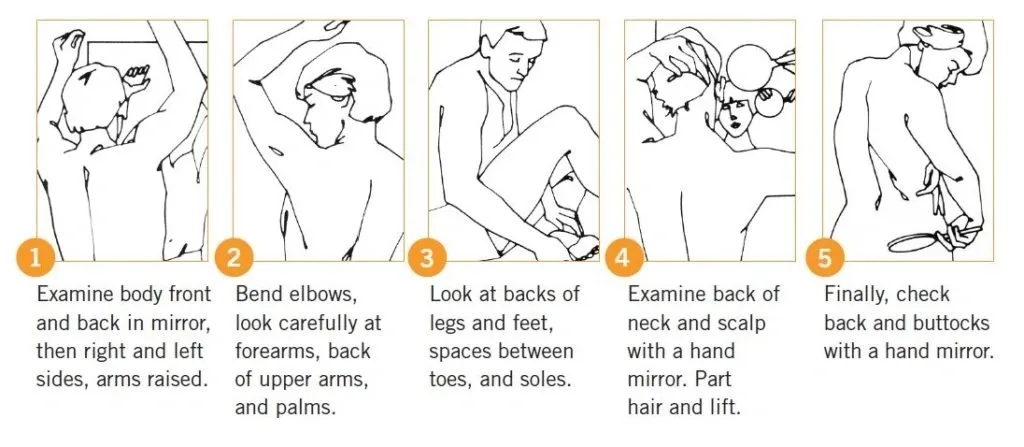
Importantly, not all skin cancers are caused by sun exposure. Skin cancers can occasionally develop in areas that receive little or no sun exposure.
Be sure to check:
* Between your fingers and toes
* Palms of your hands
* Soles of your feet
* Under your fingernails and toenails
* Armpits
* Groin and genital region
* Buttocks
A thorough skin examination may sound time-consuming initially, but with practice it becomes a simple routine — much like brushing your teeth.
The SCAN framework
The SCAN Framework is a practical way to help identify spots that may need medical assessment.
As you SCAN your , look for any spots that are:
Sore
A spot that is becoming increasingly sore, tender, or unusually painful.
Changing
A spot that changes in:
• Size
• Shape
• Colour
• Texture
Particularly if these changes occur over a relatively short period, such as several weeks or months.
Abnormal
A spot that looks, feels, or behaves differently from your “family of spots”.
Abnormal appearance:
• The lesion stands out as an “ugly duckling” — noticeably different from surrounding spots.
Abnormal behaviour:
The lesion may:
• Become scaly
• Itchy
• Bleeding
• Tender tender
• Failing to heal within 6 weeks
New
A new spot appearing on your skin, particularly if you are over 40 years of age.
When Should You Arrange a Professional Skin Check?
If you identify a spot or mole with one or more SCAN features, consider booking a professional skin assessment.
This may include:
- A targeted spot check for 1-3 lesions of concern
- A comprehensive full skin check, particularly if you have not had one recently
Early assessment provides the best opportunity for early detection and timely treatment.